MCA vs. Business Loan: Which Funding Fits Your Cash Flow?
Both put cash in your account fast — but they are priced, repaid and underwritten very differently. Here is how to choose with confidence.
Sep 19, 2026Read
Eight ways to fund a business, what each one costs, and the exact situation where each is the right answer. Use it as a map before you apply anywhere.
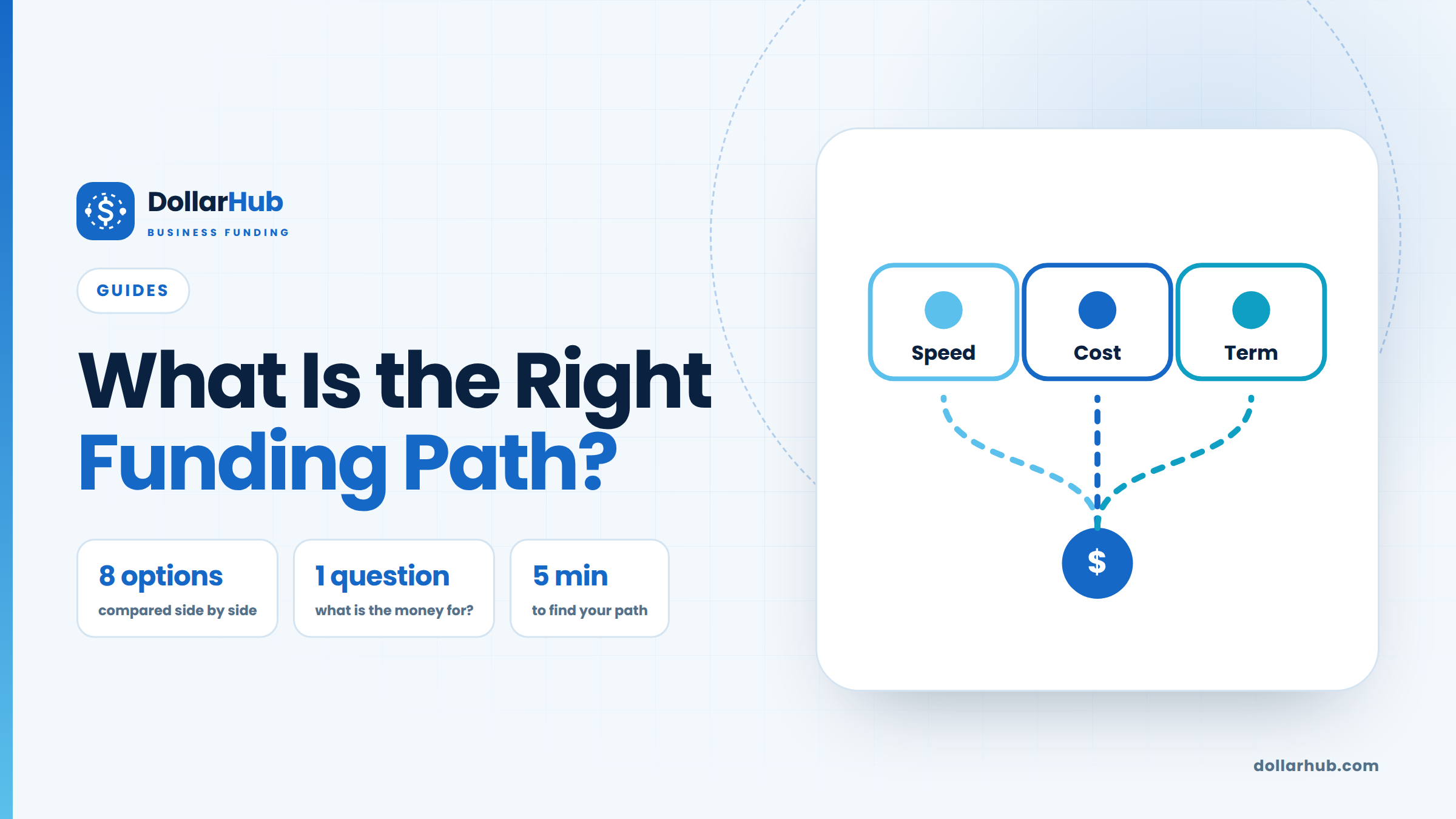
"What kind of funding do I need?" is the wrong first question. The right one is "what am I spending this money on, and when does it pay me back?" Answer that, and the list of options shrinks fast. This guide walks through every mainstream funding option for a US small business, what each one costs, and the exact situation it fits.
Match the length of the financing to the life of the thing you are buying. Short-lived needs — inventory, payroll gaps, a marketing push — want short, flexible money. Long-lived assets — a building, a machine, another business — want long, cheap money. Funding a ten-year asset with a six-month advance is the single most common and expensive mistake owners make.
Government-guaranteed, up to $5 million, with variable rate ceilings running from 10.00% to 13.50% depending on loan size as of October 2026, and terms up to 10 years for working capital or 25 years for real estate. Expect a real application: tax returns, financials, a business plan for acquisitions, and several weeks of underwriting.
Use it when: you are buying a business, buying property, refinancing expensive debt, or funding a large expansion and you can wait 30–90 days. See the SBA loan guide.
A fixed amount repaid monthly over one to five years, typically 8–13% for strong borrowers. Requires two years of profitable operation, decent credit and often collateral.
Use it when: you have bank-ready financials and a defined, one-time investment.
A revolving limit you draw from, repay and draw again. Banks look for 2+ years and $250,000+ in revenue; online lenders start around 6–12 months and $50,000–$100,000. You pay only on what you use.
Use it when: your problem is timing rather than a single purchase — seasonal swings, slow-paying customers, inventory cycles. Details in the BLOC guide.
The equipment is the collateral, so approval leans on the asset. In 2026, rates run roughly 6–22% APR over 2–7 years, with 0–10% down for strong credit and more for used machines.
Use it when: you are buying a truck, machine, kitchen, or any titled asset that will produce revenue for years. See the equipment financing guide.
A lump sum against future card and bank sales, repaid as a percentage of daily receipts. Factor rates typically 1.15–1.50, with funding in days and approval around 65%.
Use it when: you need money this week, your sales are strong but uneven, and the use of funds pays back quickly — a bulk inventory discount, an urgent repair, a short seasonal build. See the MCA guide.
You sell or borrow against unpaid B2B invoices, usually at 1–4% per 30 days. Approval depends more on your customers' credit than yours.
Use it when: you invoice other businesses on net-30 to net-90 terms and your cash is stuck in receivables.
SBA 504 for owner-occupied property with roughly 10% down, conventional commercial mortgages, or DSCR loans for investment property. Terms run 10–25 years.
Use it when: you are buying or refinancing property. See the commercial real estate guide.
Similar to an advance but usually with a fixed monthly percentage rather than daily debits, and often used by subscription or e-commerce businesses with predictable revenue.
Use it when: growth spend has a measurable, short payback and you want repayment tied to performance.
| Option | Typical speed | Relative cost | Best for |
|---|---|---|---|
| SBA 7(a) | 30–90 days | Lowest | Acquisition, property, refinancing |
| Bank term loan | 2–6 weeks | Low | Defined expansion |
| Line of credit | 1 day–3 weeks | Low–medium | Cash flow gaps |
| Equipment financing | 1–7 days | Low–medium | Machines, vehicles |
| Invoice factoring | 2–7 days | Medium | Slow-paying B2B customers |
| Merchant cash advance | 1–3 days | Highest | Urgent, short-payback needs |
Yes, and sensible stacks are common: an SBA loan for the building, equipment financing for the machines, and a line of credit for working capital. What causes trouble is layering multiple short-term advances on the same daily revenue.
SBA and bank loans, almost always. The trade-off is time and documentation. The real comparison is total cost over the period you will actually hold the money.
Realistically: equipment financing with a down payment, invoice factoring if you invoice businesses, a merchant cash advance if you have steady deposits, or a personally guaranteed line. Most term lenders want 12–24 months of history.
Rough illustration, assuming a strong-but-not-perfect file and a full year of use:
| Product | Indicative cost of $100,000 | Payment rhythm |
|---|---|---|
| SBA 7(a), 10 years | About $11,000 in year one | Monthly |
| Equipment financing, 5 years | About $9,000–$14,000 in year one | Monthly |
| Line of credit, drawn half the year | About $7,000–$9,000 | Interest on drawn balance |
| Online term loan, 2 years | About $18,000–$30,000 in year one | Weekly or monthly |
| Merchant cash advance, 1.30 factor | $30,000, typically inside 6–9 months | Daily or weekly |
These are illustrations, not quotes — pricing depends on your file. The pattern is what matters: the cost of money roughly triples as you move from government-backed to same-week funding, and the repayment rhythm moves from monthly to daily.
Work from cheapest to fastest, not the other way round. Start with the option that fits the purpose and your timeline, keep a second in reserve, and only move down the list when a real constraint — time, documentation, credit — rules the cheaper option out. Owners who start with the fastest product rarely come back up the list afterwards.
Both put cash in your account fast — but they are priced, repaid and underwritten very differently. Here is how to choose with confidence.
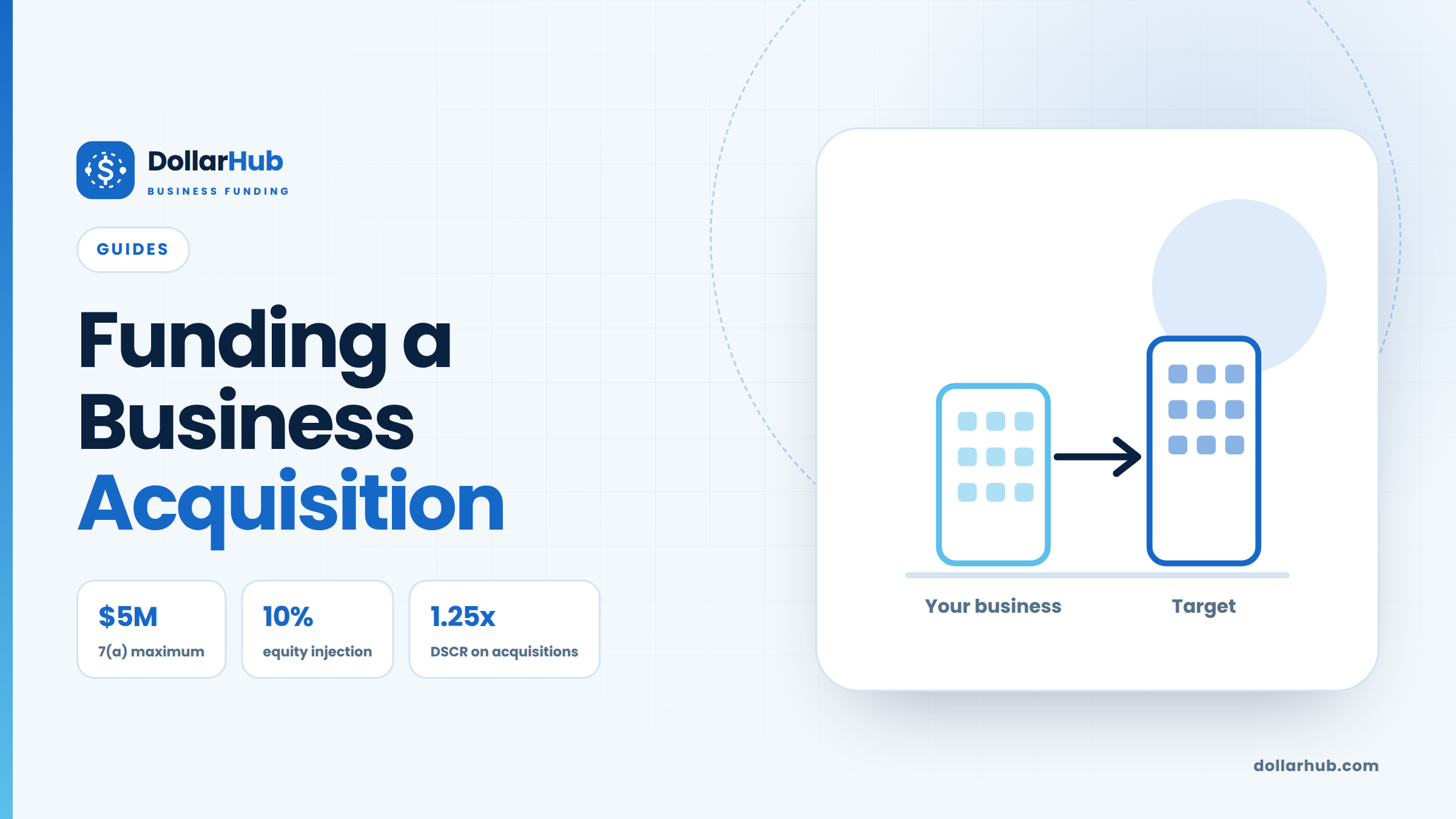
Most small acquisitions are funded with an SBA 7(a) loan plus a seller note. Here is how the stack works in 2026, what the new rules changed, and the other routes worth knowing.
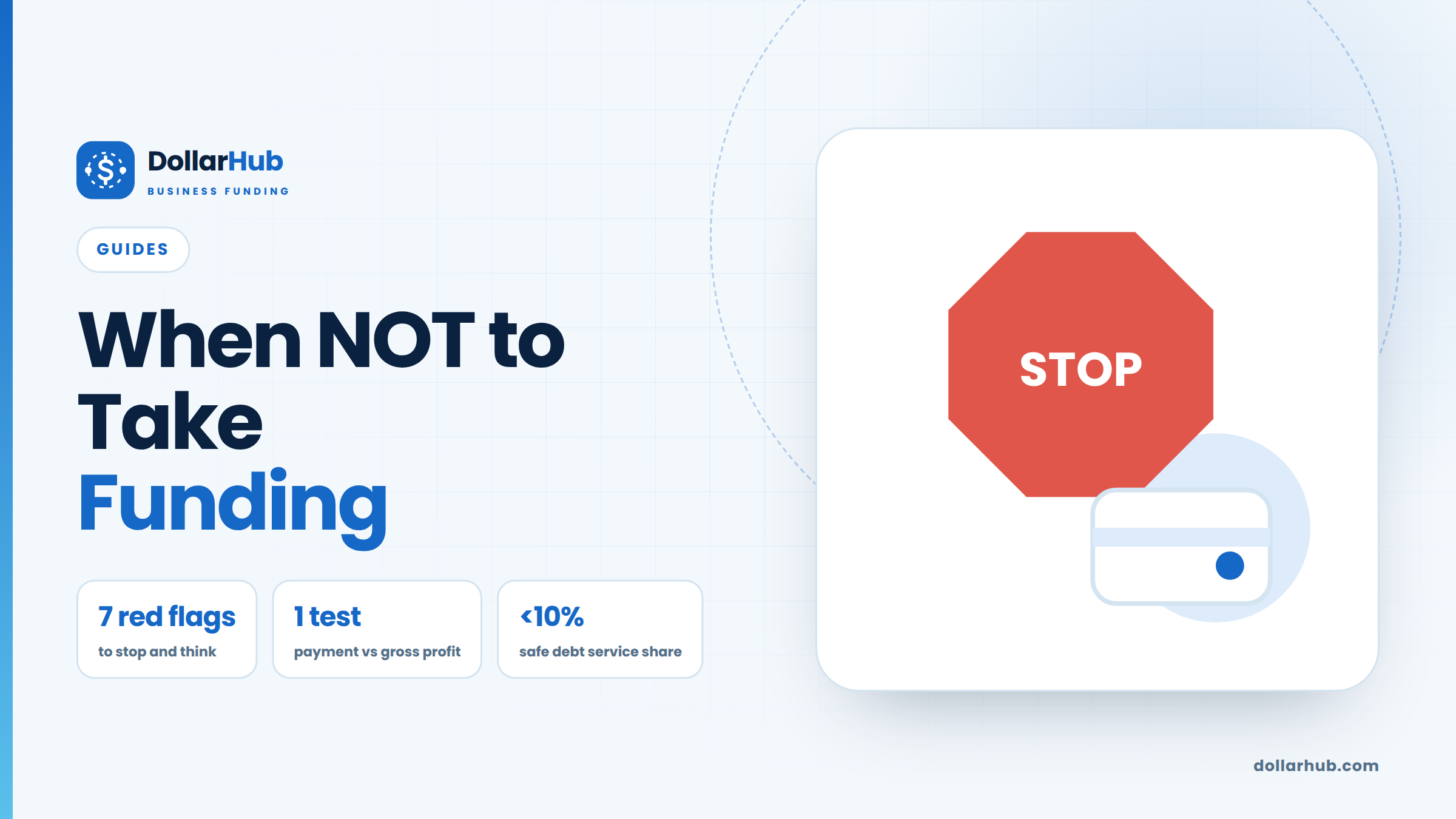
Capital solves a timing problem. It does not solve a margin problem. Seven moments when the right answer is no — and what to do instead.