Can I Get a Business Loan With a Low Credit Score?
Credit score sets the menu, not the verdict. Here is what each band can realistically get, what it costs, and how to move up one tier in about 90 days.
Oct 14, 2026Read
The SBA rulebook changed more in the last year than in the previous five. Current rates, fees, limits and the new acquisition rules, in plain English.
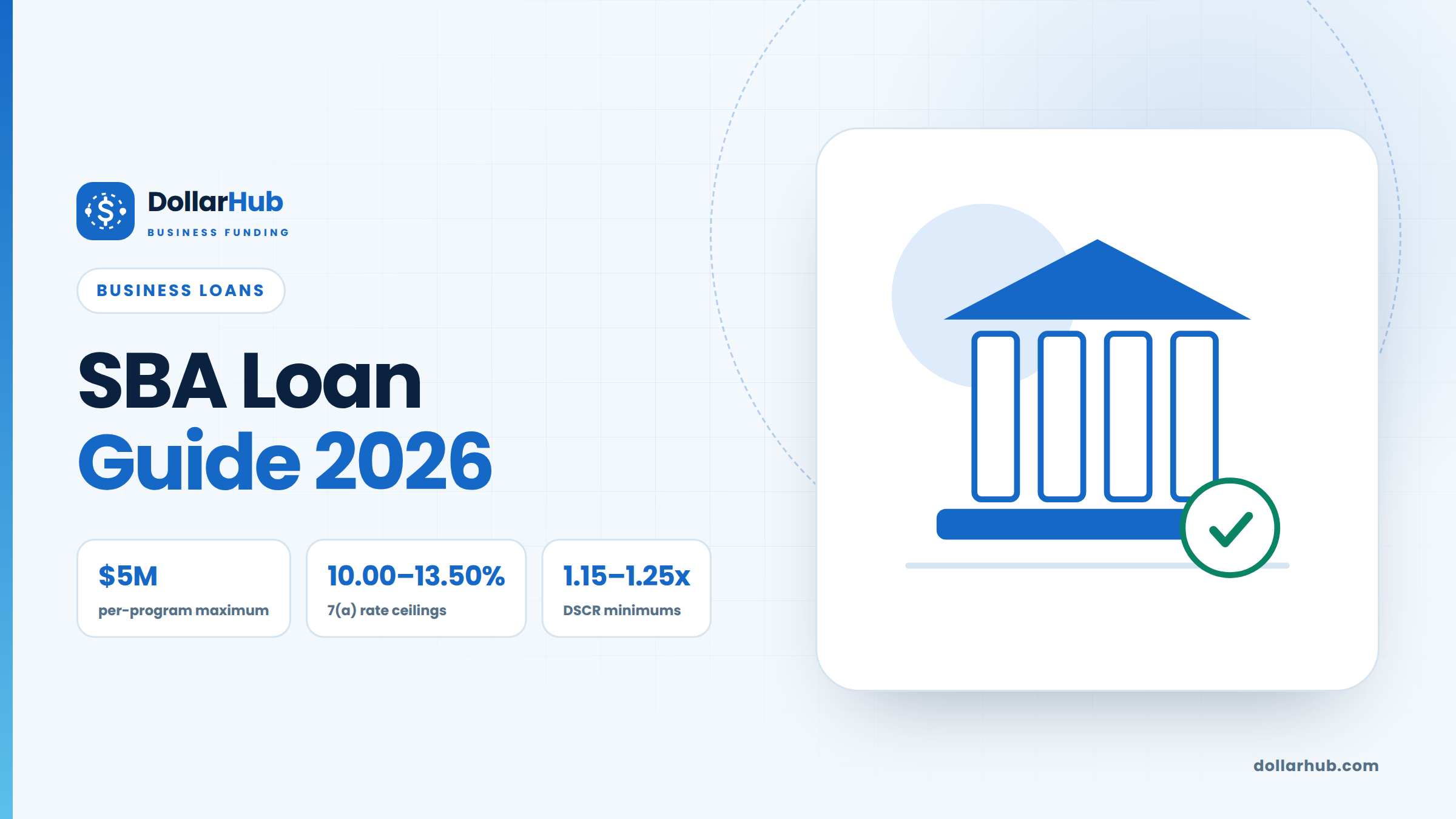
SBA loans are the cheapest capital most small businesses will ever qualify for, and the rulebook changed more between mid-2025 and late 2026 than in the five years before it. This guide covers the three programmes that matter, current rates and fees, the new acquisition rules, and exactly what you need to apply.
The Small Business Administration does not lend money. It guarantees a portion of a loan made by a bank or non-bank lender, which reduces the lender's risk and allows longer terms, smaller down payments and capped rates. You still apply to a lender, and the lender still underwrites you.
Up to $5 million for working capital, equipment, refinancing, business acquisition or real estate. Terms up to 10 years for most uses and 25 years for real estate. Variable rates are capped as a spread over Prime.
Property and heavy equipment, structured as roughly 50% bank, 40% CDC at a long-term fixed rate, 10% borrower. CDC portion up to $5 million, or $5.5 million for small manufacturers and energy-efficient projects.
Up to $500,000 with a 50% guarantee and faster turnaround, often as a line of credit. Same rate ceilings as 7(a).
With Prime at 7.00% as of October 2026, the 7(a) variable ceilings were:
| Loan size | Maximum spread | Ceiling |
|---|---|---|
| $50,000 or less | Prime + 6.5% | 13.50% |
| $50,001–$250,000 | Prime + 6.0% | 13.00% |
| $250,001–$350,000 | Prime + 4.5% | 11.50% |
| Over $350,000 | Prime + 3.0% | 10.00% |
These are ceilings, not quotes — lenders can and do price below them. Typical qualified pricing has been around 10–13%. The SBA Optional Peg Rate for fixed-rate loans was 5.00% for Q4 2026, and 504 debenture pricing in September 2026 ran about 6.54–6.61% fixed.
Limits: $5 million per programme, and since July 2026 up to $10 million combined across 7(a) and 504 for the same business.
For loans approved between 1 October 2026 and 30 September 2027, charged on the guaranteed portion:
Qualifying manufacturers, certain food supply chain businesses and rural businesses pay no guaranty fee on 7(a) loans of $700,000 or less this fiscal year. With lender packaging and closing costs, total upfront cost on a typical $500,000 7(a) lands around 3–4% of the loan.
Pre-qualification takes a few days. Full underwriting and closing usually runs 30–90 days, with real estate at the longer end. The fastest path is a complete file on day one — missing documents, not SBA processing, cause most delays.
If you can wait 30–90 days, almost always. On $500,000, the difference between 11% SBA money over 10 years and short-term alternative funding is usually six figures in total cost.
Qualifying business debt can be refinanced, and high-cost short-term debt is a common reason lenders approve one. Expect scrutiny of why the debt was taken and whether cash flow now supports the new payment. See refinancing options.
The SBA requires lenders to take available collateral but does not decline a loan solely for insufficient collateral when cash flow is strong. Personal guarantees from 20%+ owners are standard, and a lien on your home may be required if you have substantial equity.
Yes, with a 10% equity injection, relevant experience, a credible plan and often additional collateral. Expect a higher bar than an established business refinancing or expanding.
SBA rules, rates and fees change frequently. Figures reflect guidance published as of October 2026 — confirm with your lender before relying on them.
SBA timelines are driven mostly by document flow, not by the agency. Three habits cut weeks off:
Each of these is fixable with time. If you are declined, ask for the specific reason in writing — it is almost always a condition you can satisfy on the next attempt.
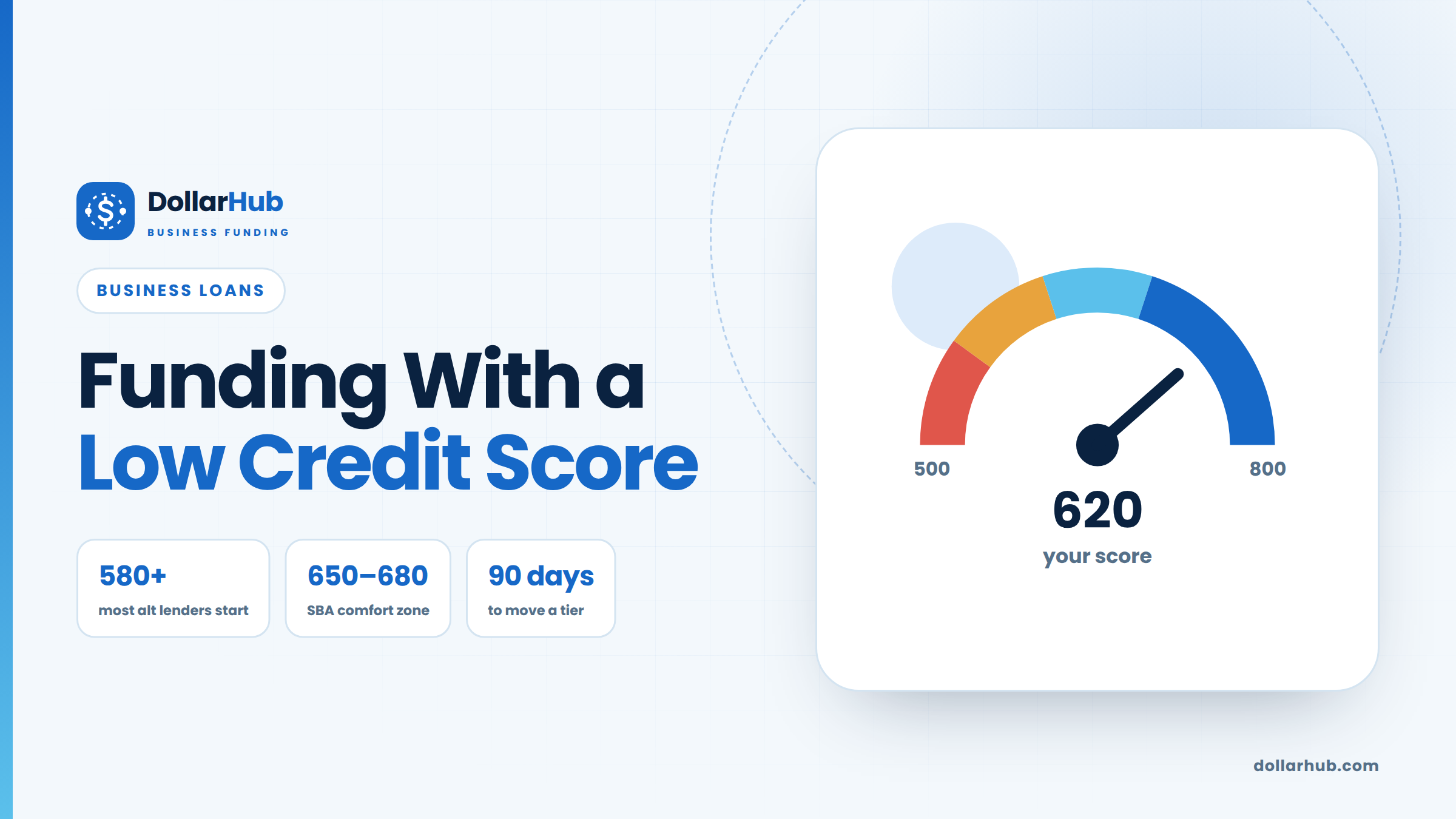
Credit score sets the menu, not the verdict. Here is what each band can realistically get, what it costs, and how to move up one tier in about 90 days.
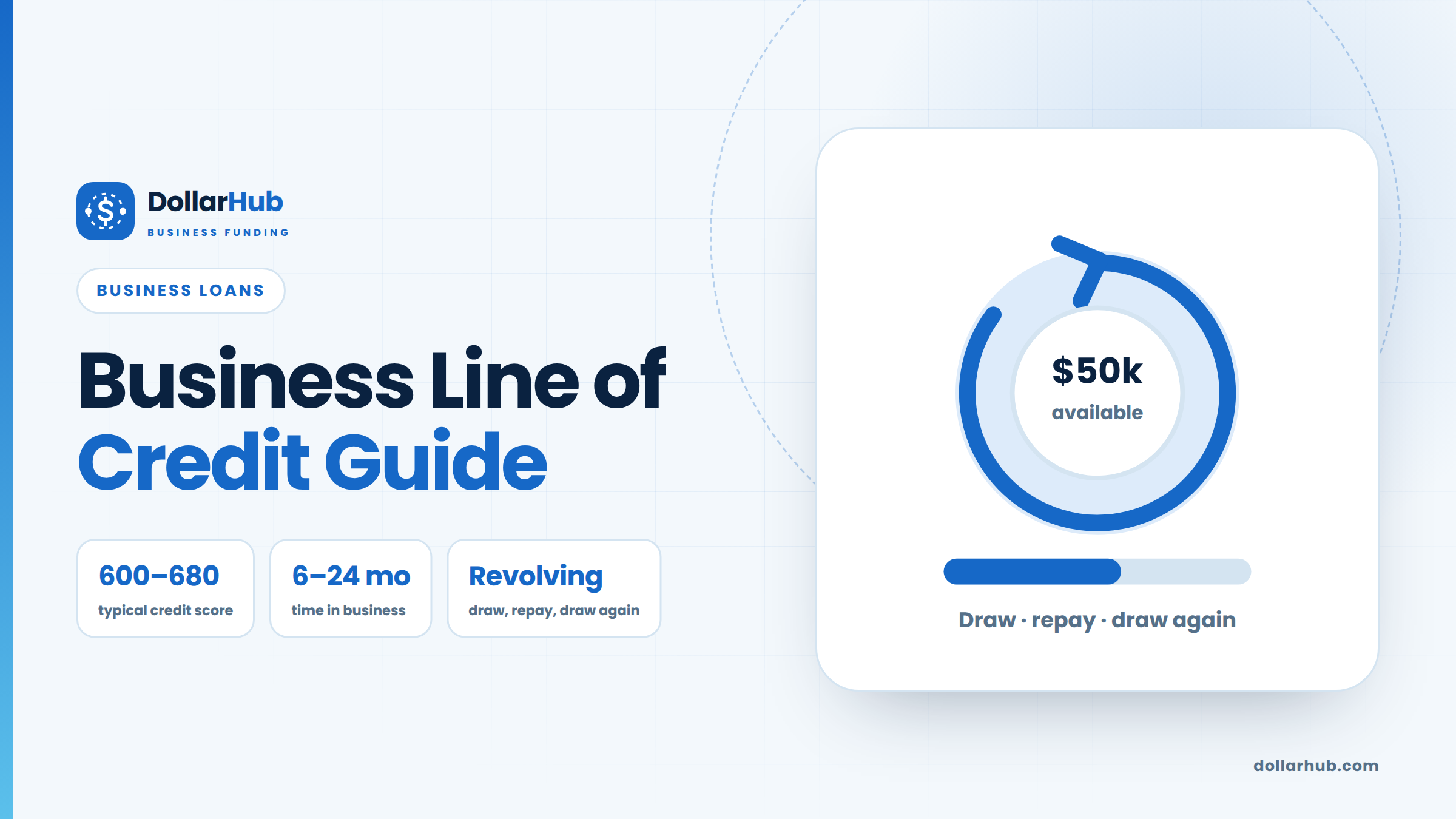
A line of credit is the cheapest insurance against a slow month — if you set it up before you need it. Requirements, costs and the traps in the fine print.
Have these ready and your application moves faster — from bank statements to your EIN.