MCA vs. Business Loan: Which Funding Fits Your Cash Flow?
Both put cash in your account fast — but they are priced, repaid and underwritten very differently. Here is how to choose with confidence.
Sep 19, 2026Read
Most small acquisitions are funded with an SBA 7(a) loan plus a seller note. Here is how the stack works in 2026, what the new rules changed, and the other routes worth knowing.
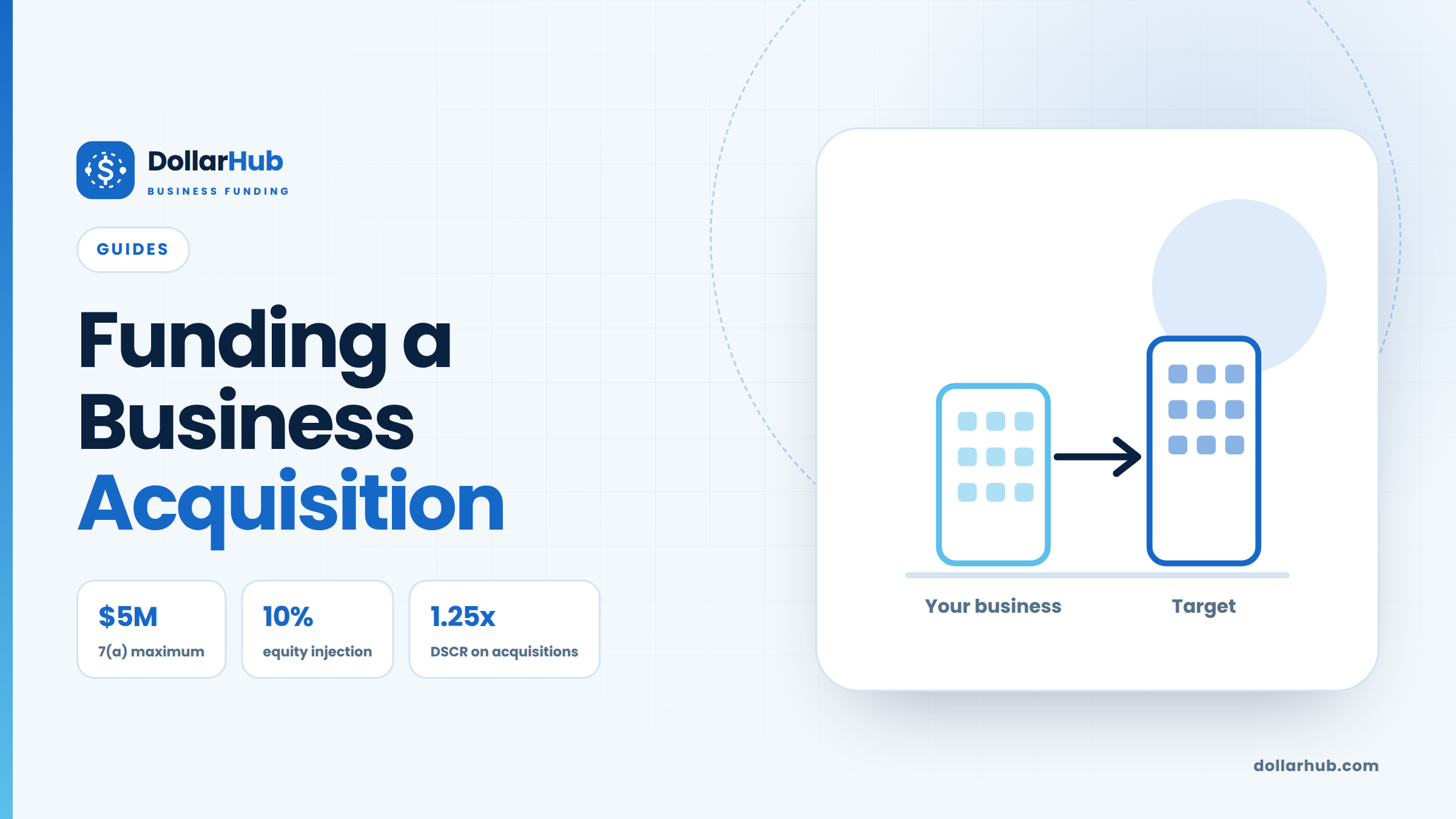
Buying an existing business is usually cheaper than building the same revenue from scratch — and in the US, most small acquisitions under $5 million are financed the same way: an SBA 7(a) loan, a seller note, and a slice of the buyer's own cash. Here is how the stack works in 2026, what changed in the rules this year, and when a different route fits better.
A typical $1,000,000 acquisition is funded roughly like this:
| Source | Share | Notes |
|---|---|---|
| SBA 7(a) loan | 80–90% | Up to $5 million, 10-year term for goodwill-heavy deals |
| Buyer equity injection | 10% minimum | Required on first-time acquisitions and changes of ownership |
| Seller note | Up to half the injection | Only counts toward equity if on full standby for the life of the loan |
So on a $1,000,000 purchase, expect to bring $100,000, of which up to $50,000 can be a standby seller note — meaning the seller receives nothing on it until the SBA loan is repaid.
The acquisition rulebook tightened through 2025 and 2026. The points that affect buyers most:
Some sellers will carry 30–60% of the price over three to seven years. It is fast, flexible and avoids an underwriting process, but sellers usually want a higher price or security over the assets. Works best for smaller deals and for buyers the seller already knows.
Banks will lend against a business with hard assets, long history and strong cash flow, often at better rates than SBA and without guaranty fees. Expect a larger down payment — commonly 20–30% — and tighter covenants.
If the target has substantial receivables, inventory or equipment, part of the price can be funded by a facility secured on those assets, with an SBA loan or seller note covering the goodwill portion.
Bringing an equity partner reduces debt pressure but gives up ownership. Common where the buyer is strong operationally but light on capital.
Part of the price is paid from future performance. Useful when buyer and seller disagree on value, and often combined with SBA financing — though the SBA has specific rules about how earn-outs are structured, so raise it early.
Beyond the down payment: the SBA guaranty fee (3% to 3.75% of the guaranteed portion on larger loans in FY2027, with waivers for some manufacturers, rural and food supply chain businesses), lender packaging and closing fees, valuation, legal, and Quality of Earnings where applicable. Total upfront cost on a typical deal lands around 3–4% of the loan amount.
Not under current SBA rules for a first-time acquisition — 10% equity is required, and at most half of that can be a standby seller note. Fully seller-financed deals outside the SBA programme exist but are rarer and usually priced accordingly.
Up to $5 million per programme, or $10 million combined across 7(a) and 504. The practical limit is cash flow: the business must cover the new payment at 1.25x after a reasonable owner salary.
Yes, partial changes of ownership are allowed, but the rules on who can buy what share changed in 2026. Expect scrutiny if you have been with the business less than two years.
If the seller keeps a stake below 20%, they generally must guarantee the loan for at least two years after final disbursement.
SBA rules change frequently. Figures reflect guidance in effect as of October 2026 — confirm specifics with your lender before relying on them.
Lenders will check these, and so should you — ideally before you spend money on diligence:
One of the 7(a) programme's advantages is that a single loan can cover the purchase price, closing costs and a working capital tranche. Ask for it upfront. Going back for additional funding three months after closing is far harder than including it in the original request, and it is the most common avoidable mistake first-time buyers make.
Both put cash in your account fast — but they are priced, repaid and underwritten very differently. Here is how to choose with confidence.
Capital solves a timing problem. It does not solve a margin problem. Seven moments when the right answer is no — and what to do instead.
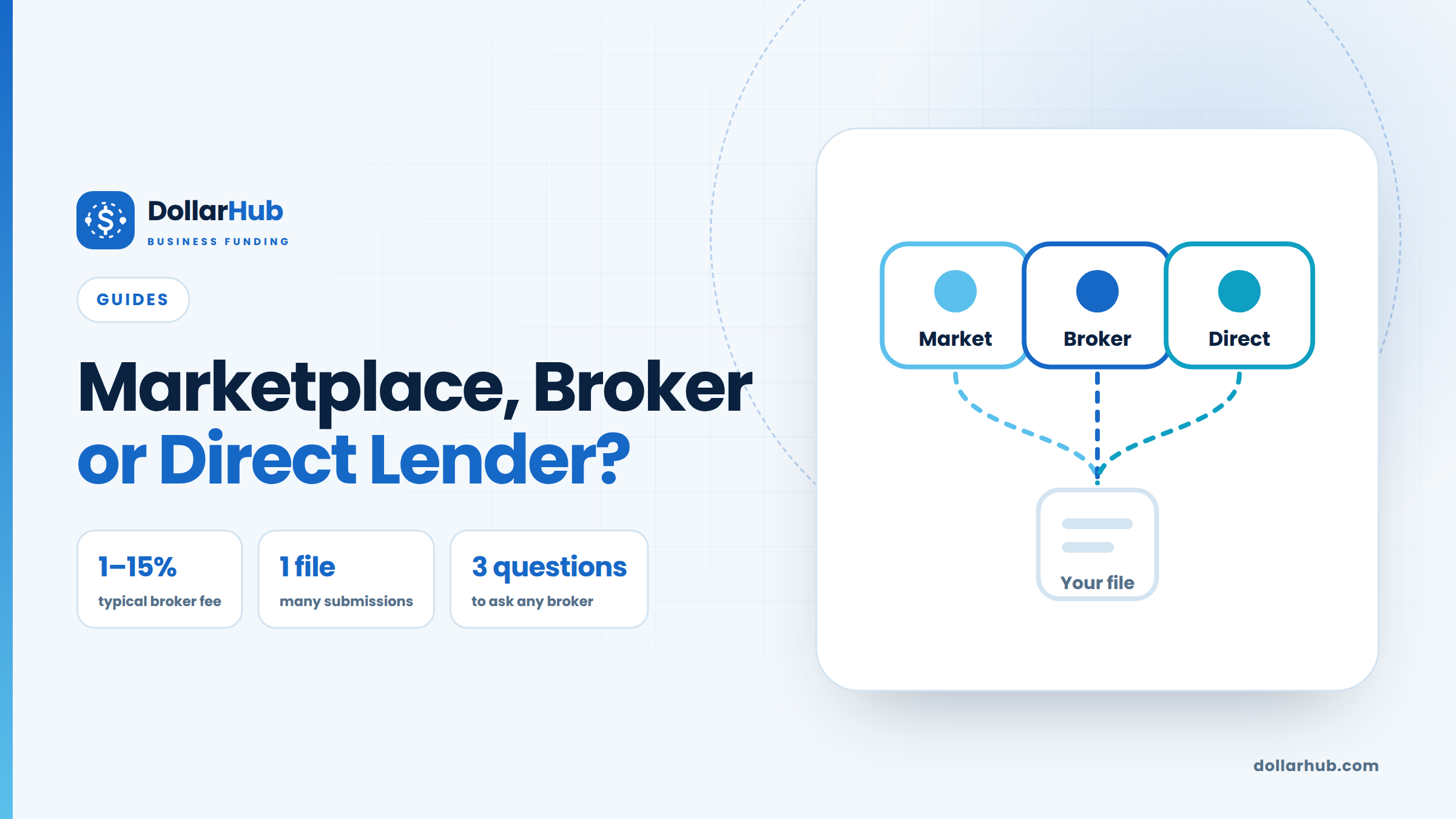
Each route has a place. The difference shows up in how your file is shopped, who gets paid, and how many hard pulls land on your credit.