Factor Rates Explained: How to Read an MCA Offer
A factor rate is not an interest rate. Here is how to turn it into a number you can actually compare.
Sep 13, 2026Read
An MCA is not a loan, and a factor rate is not an interest rate. This guide shows the maths, the qualification bar and the clauses that matter before you sign.
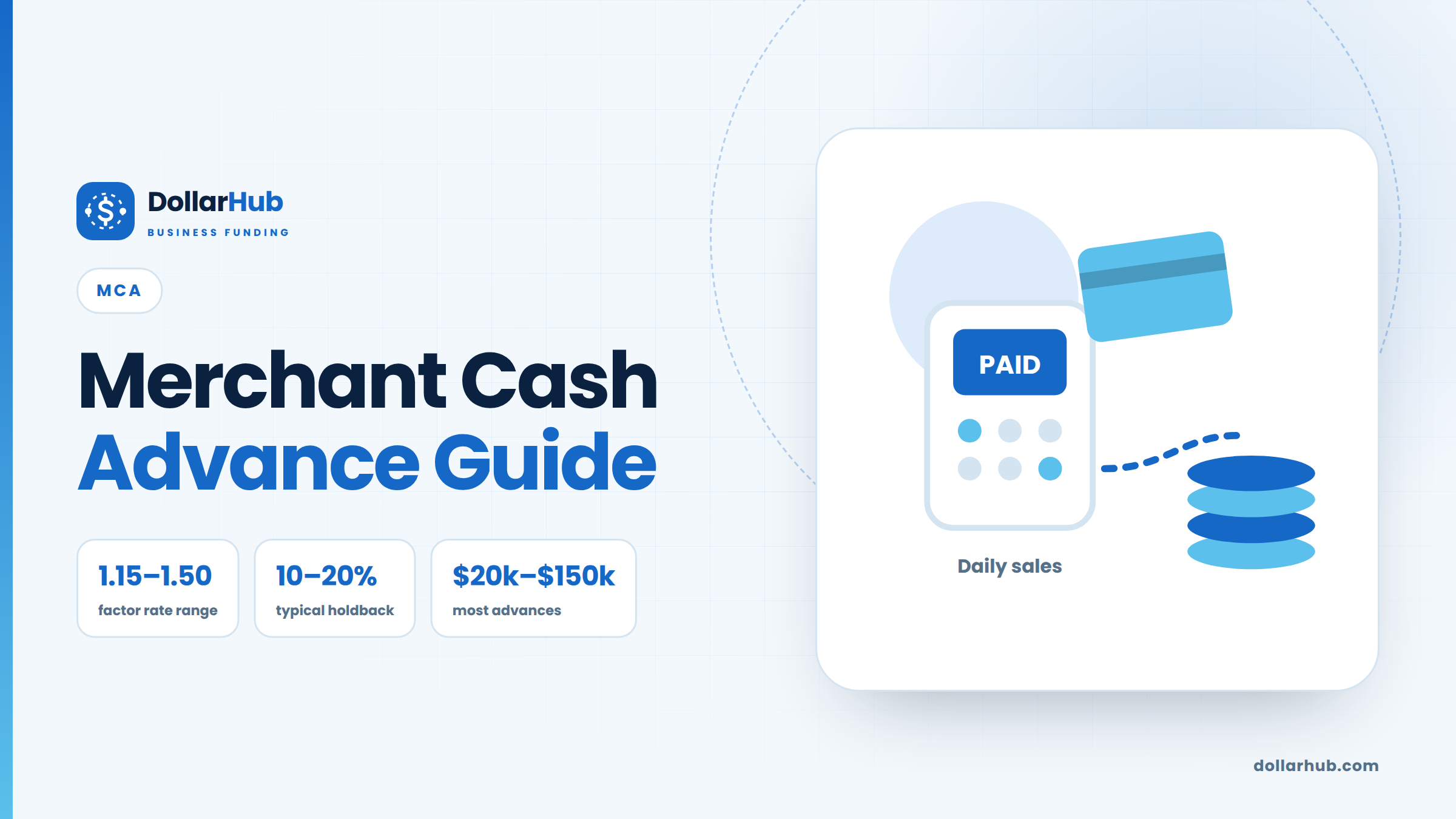
A merchant cash advance is the fastest money in small business finance and the most misunderstood. It is not a loan, the "rate" is not an interest rate, and the real cost depends on something no one can tell you at signing: how quickly your sales repay it. This guide covers the mechanics, the maths, the qualification bar and the clauses that matter.
A funder buys a portion of your future receivables at a discount. You receive a lump sum today; they collect an agreed percentage of your daily or weekly sales until an agreed total has been remitted. Because it is a purchase of receivables rather than a loan, it sits outside most state lending laws — which is why disclosure laws were introduced to cover it separately.
Example. A $50,000 advance at a 1.30 factor means $65,000 total payback. With $3,000 average daily sales and a 12% holdback, roughly $360 a day is remitted, so repayment takes about 180 business days — close to nine calendar months.
Interest accrues over time on a shrinking balance. A factor rate is a fixed fee on the full amount, charged whether you repay in four months or twelve. The faster you repay, the higher the effective annualised cost. That $65,000 payback on $50,000 is a $15,000 cost: about 30% of the advance, but roughly 60% annualised if repaid in six months.
This is also why prepayment usually saves nothing unless the agreement includes an early payoff discount. Ask explicitly.
If your revenue is uneven, ask for true percentage remittance or a reconciliation clause that lets you adjust the debit when sales drop. A funder who refuses both is selling you a fixed obligation dressed up as a flexible one.
Approval rates across the MCA market run around 65%, compared with 25–30% at banks. Funding commonly lands in one to three business days.
Expect an origination or underwriting fee, often 1–5% of the advance, deducted at funding. What you should not accept: undisclosed broker commissions buried in the payback, ACH fees of $50 a week, or a "programme fee" nobody can explain. In states with commercial financing disclosure laws — currently ten, including California, New York, Texas and Florida — you are entitled to a standardised sheet showing total funds, total repayment, payment amount and frequency and an estimated APR before signing.
Good fit: a time-boxed opportunity with fast payback — bulk inventory at a real discount, an urgent equipment repair that stops downtime, a short seasonal build, a contract that needs working capital now and pays in 60 days.
Poor fit: covering ongoing operating losses, funding a long project with no revenue until completion, paying off another advance, or financing a long-life asset that equipment finance would fund at a fraction of the cost.
| Merchant cash advance | Business term loan | |
|---|---|---|
| Cost basis | Factor rate, fixed fee | Interest rate / APR |
| Repayment | Daily or weekly, often % of sales | Fixed monthly |
| Speed | 1–3 days | 1–6 weeks |
| Credit bar | 500+ | 640+ |
| Early payoff | Usually no saving | Usually saves interest |
Most funders do not report to consumer bureaus, but many file a UCC lien that other lenders will see. Defaults can end up in court records and collections.
You can, but you usually owe the full payback amount unless a discount is written into the contract. Always request a written payoff letter.
With true percentage remittance, payments fall automatically. With fixed ACH, you must invoke the reconciliation clause — in writing, with statements attached. Ignoring it leads to NSFs and default.
Stacking is the most common cause of MCA distress and often breaches the first agreement. If one advance is not enough, ask that funder for an increase or look at refinancing options.
Market figures reflect data published through October 2026.
That last step matters. Unreleased UCC liens routinely block the next, cheaper facility months later, and funders do not always file the termination automatically.
A factor rate is not an interest rate. Here is how to turn it into a number you can actually compare.
Taking several advances at once can squeeze daily cash flow. Consider these alternatives first.
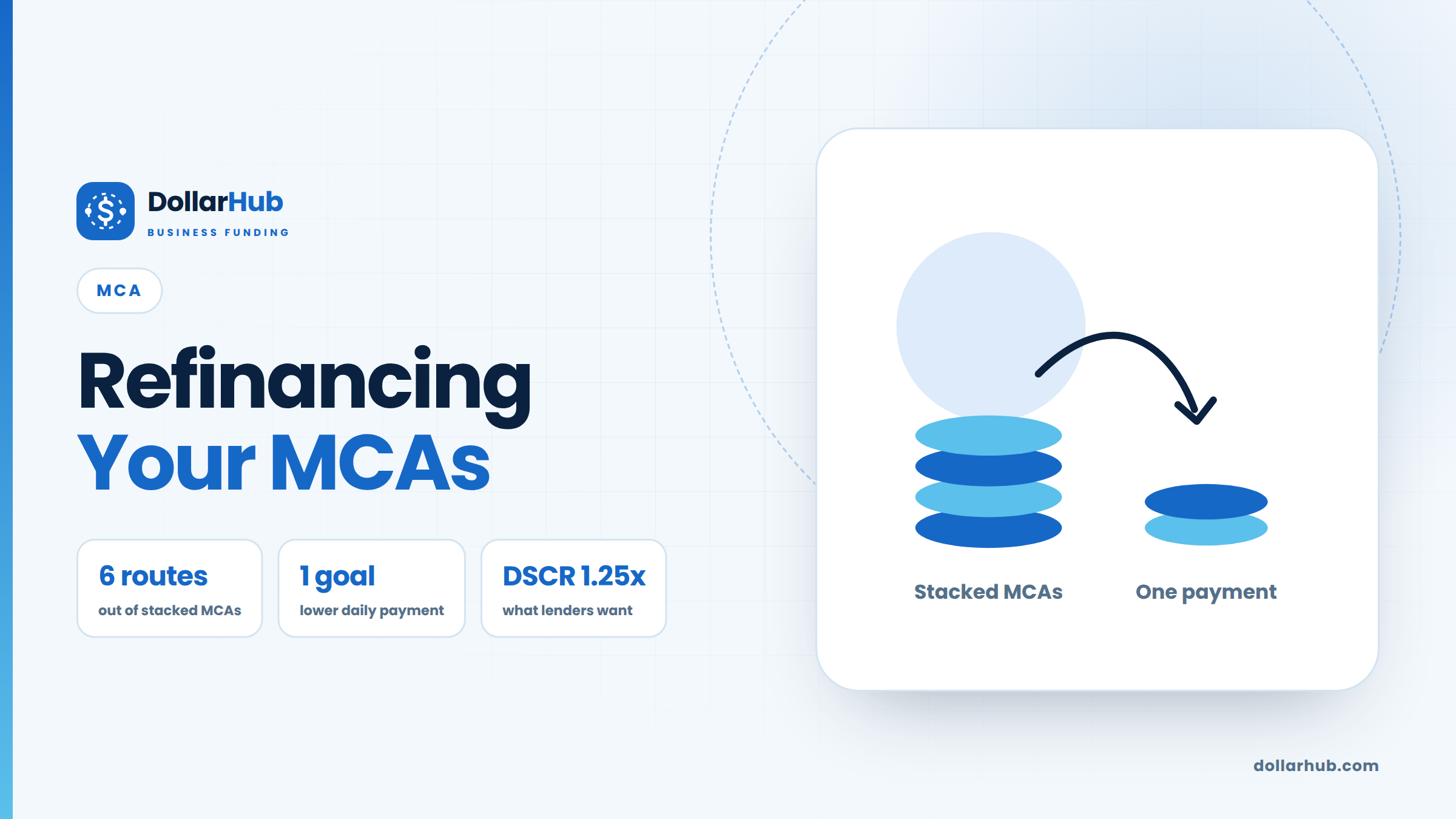
Six real ways out of stacked advances, from a single consolidation loan to a negotiated workout — plus the warning signs of the 'debt relief' offers that make things worse.