Can I Get a Business Loan With a Low Credit Score?
Credit score sets the menu, not the verdict. Here is what each band can realistically get, what it costs, and how to move up one tier in about 90 days.
Oct 14, 2026Read
A line of credit is the cheapest insurance against a slow month — if you set it up before you need it. Requirements, costs and the traps in the fine print.
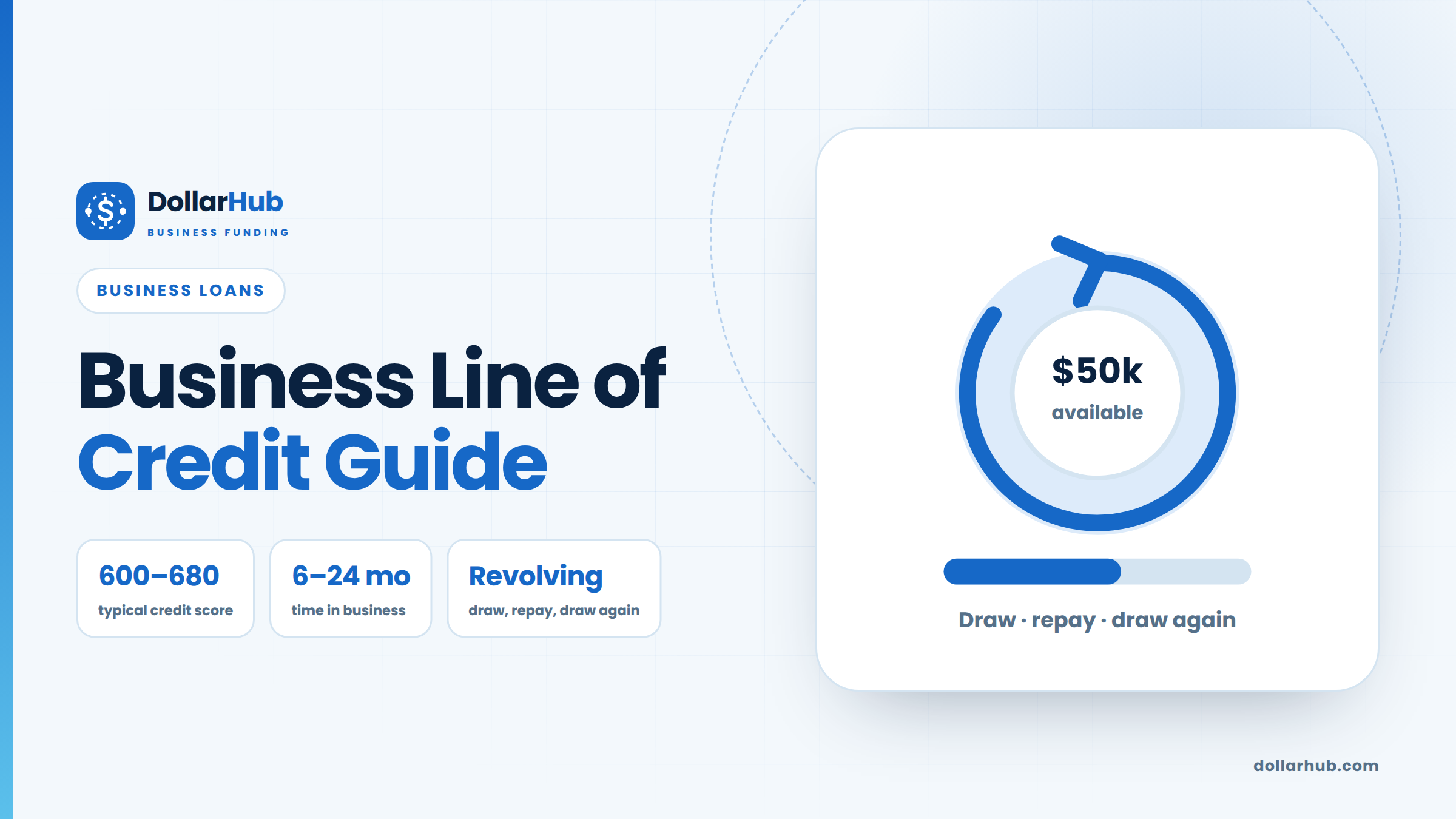
A business line of credit is the most useful facility most small businesses never set up. It costs nothing until you draw on it, it smooths the gap between paying suppliers and getting paid, and it is far cheaper than the emergency funding you will otherwise take at 2am on a Friday. Here is how a BLOC works, who qualifies in 2026, and what to watch in the fine print.
A lender approves a maximum limit. You draw what you need, pay interest only on the drawn balance, repay, and draw again. Most online lines are "revolving" with a draw period, while some are structured as a series of short instalment draws, each repaid over 6–18 months.
The difference from a term loan is availability. A term loan gives you one lump sum with a fixed schedule; a line gives you a standing option. For recurring timing problems — seasonal inventory, payroll between contract payments, slow-paying customers — the option is worth more than the lump sum.
| Requirement | Traditional bank | Online lender |
|---|---|---|
| Personal credit score | 680–720+ | 600–650 |
| Time in business | 2+ years | 6–12 months |
| Annual revenue | $250,000+ | $50,000–$100,000 |
| Collateral | Often required | Sometimes |
| Approval timeline | Weeks | 1–5 days |
Nearly every line requires a personal guarantee from owners holding 20% or more. Expect to provide one to two years of tax returns, three to six months of bank statements, financial statements, formation documents and your EIN — less for smaller online limits.
Secured lines are backed by receivables, inventory, equipment or property. They carry higher limits, lower pricing and more forgiving credit requirements. Asset-based lines commonly advance 80–85% against eligible receivables and far less against inventory.
Unsecured lines rely on cash flow and your guarantee. Faster to close, smaller limits, higher cost, and typically a stronger credit profile required — around 680 and up.
Pricing varies widely, so read for these components rather than a single rate:
A line with a low headline rate and a 2% draw fee used twelve times a year is not a cheap line.
Unsecured limits typically land between 10% and 20% of annual revenue. Asset-based lines are sized against collateral and can be far larger.
With most online lenders, no. Banks sometimes charge an annual or non-usage fee. Ask before you accept.
Under six months, it is difficult. Options include a secured line against receivables, a business credit card with a personal guarantee, or waiting until you have a year of deposits and applying then.
No — a well-managed line usually helps, because it demonstrates credit discipline. What hurts is a maxed-out line that never reduces, or a blanket lien that complicates collateral for the new lender.
A landscaping company bills $900,000 a year, with 70% of revenue between April and September. Payroll and equipment costs start in March; the cash arrives from May onwards. The gap is about $75,000 for roughly ten weeks.
| Approach | Cost of covering the gap |
|---|---|
| $100,000 line of credit, $75,000 drawn for 10 weeks at 15% | Roughly $2,200 in interest, plus any draw fee |
| $75,000 advance at a 1.28 factor | $21,000 in cost, repaid over about six months |
The line is roughly a tenth of the cost, for the same money in the same week — but only if it was arranged in January, when the business looked strong on paper. That timing difference is the entire argument for setting up a line before the season starts.
Most unsecured limits land between 10% and 20% of annual revenue, adjusted for existing debt payments, average daily balance and credit profile. Asset-based lines are sized differently: typically 80–85% of eligible receivables under 90 days old, and 20–50% of inventory at cost. If you want a larger limit, the fastest levers are supplying full financial statements and offering specific collateral.
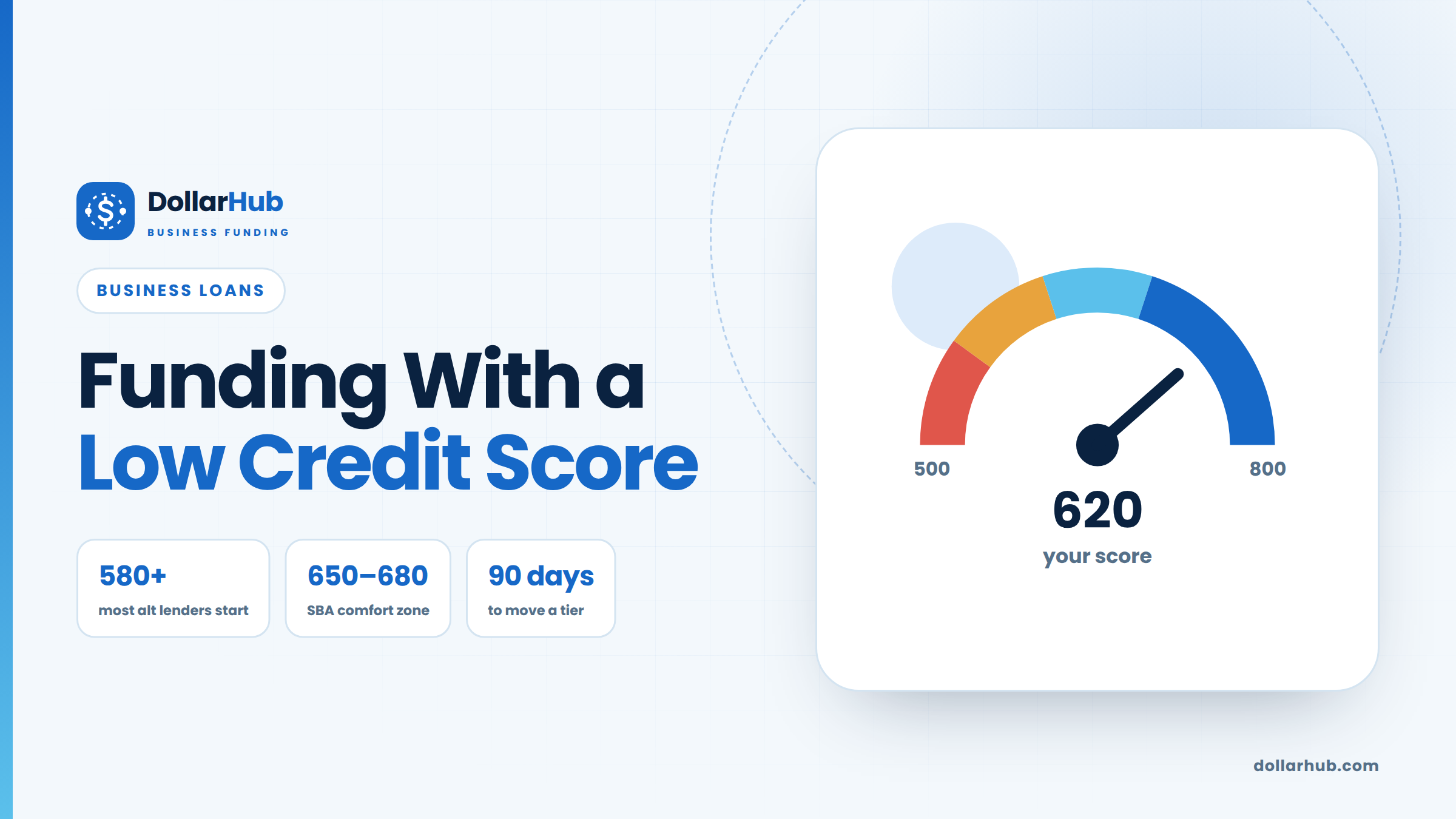
Credit score sets the menu, not the verdict. Here is what each band can realistically get, what it costs, and how to move up one tier in about 90 days.
The SBA rulebook changed more in the last year than in the previous five. Current rates, fees, limits and the new acquisition rules, in plain English.
Have these ready and your application moves faster — from bank statements to your EIN.