Can I Get a Business Loan With a Low Credit Score?
Credit score sets the menu, not the verdict. Here is what each band can realistically get, what it costs, and how to move up one tier in about 90 days.
Oct 14, 2026Read
What equipment financing costs in 2026, how loans and leases really differ, and the paperwork that gets a machine delivered this week instead of next month.
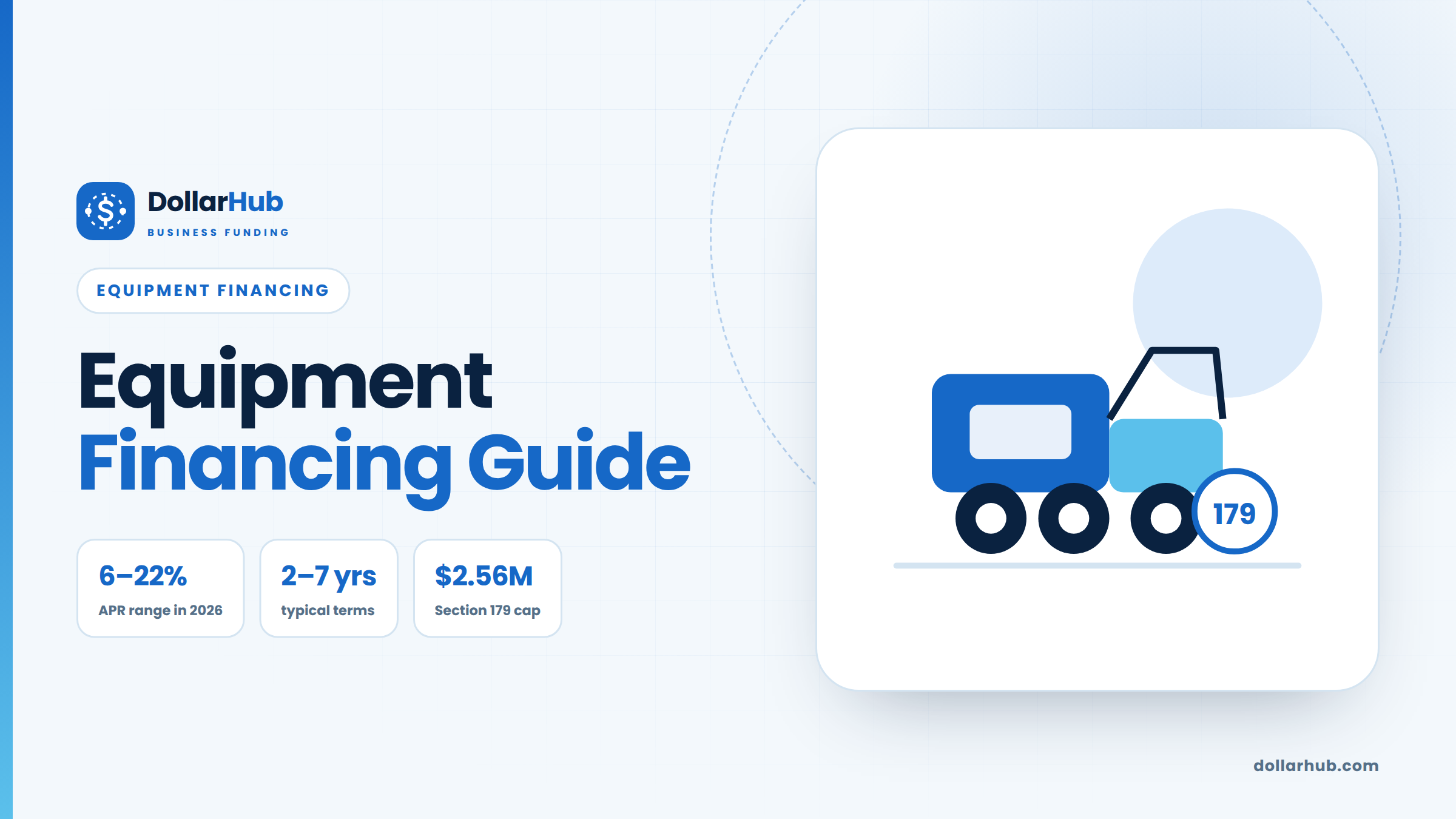
Equipment financing is the most approachable form of business borrowing, because the thing you are buying secures the loan. That changes everything about qualification: lenders care about the asset and your deposits more than your balance sheet. This guide covers 2026 pricing, loan versus lease, what you need to qualify, and how to compare quotes properly.
A lender pays your vendor for the equipment. You repay in fixed monthly instalments over two to seven years, and the equipment itself is the collateral. Because the loan is secured, approval rates are higher and documentation is lighter than for unsecured funding — for smaller amounts, often just an application and bank statements.
Eligible equipment is broad: vehicles and trailers, construction and agricultural machinery, CNC and manufacturing equipment, commercial kitchens, medical and dental equipment, IT hardware, HVAC, and more. Soft costs such as delivery, installation and training can often be rolled in.
Pricing is driven mainly by the owner's personal credit, then by the asset and the term.
| Credit score | Typical APR | Terms | Down payment |
|---|---|---|---|
| 700+ | 6–14% | 3–7 years | 0–10% new, 10–25% used |
| 650–699 | 12–18% | 3–5 years | 10–25% |
| 620–649 | 12–20% | 3–5 years | 15–25% |
| 580–619 | 18–22% | 3–4 years | 20–30% |
Used equipment typically prices one to three points above new for the same borrower. As a reference point, $100,000 over 48 months runs roughly $2,349–$2,733 a month at 700+ credit, and $2,937–$3,151 at 580–619.
| Equipment loan | $1 buyout lease | Fair market value lease | |
|---|---|---|---|
| Ownership | Yours from day one | Yours for $1 at the end | Option to buy at market value |
| Monthly cost | Lowest with a down payment | Slightly higher | Lowest monthly, highest total |
| Best for | Long-life assets you will keep | Assets you will keep, minimal down payment | Technology that dates quickly |
On a $100,000 asset over 60 months at around 9%, a loan with 10% down costs roughly $1,868 a month and about $122,000 in total; a $1 buyout lease about $2,076 a month and $124,500; an FMV lease about $1,877 a month but closer to $127,600 once you buy it out. Lease quotes are often expressed as "rate factors" — always ask for the implied interest rate before comparing.
The vendor quote is usually the bottleneck. Get it before you apply.
For the 2026 tax year, the Section 179 deduction limit is $2,560,000, phasing out once qualifying property placed in service exceeds $4,090,000, with a separate $32,000 limit for certain SUVs. Bonus depreciation at 100% is available for qualifying property acquired and placed in service under current rules. Financed equipment can still qualify, which is why a December purchase with a January first payment is a common move.
Deduction limits cannot exceed business income and eligibility rules apply — this is general information, not tax advice. Confirm with your accountant before timing a purchase around it.
Often yes, though lenders usually want an invoice, an inspection or appraisal, and clear title. Expect slightly higher rates and more down payment than for a dealer purchase.
For most small business deals, yes. Larger, well-capitalised companies can sometimes get corporate-only approval.
The lender files a UCC lien on the financed equipment specifically, which is far less restrictive than a blanket lien on all business assets. Check which one you are signing.
Usually, for a long-life asset. The rate is lower, the term matches the asset's life, and it leaves your line of credit free for working capital.
Rates and tax figures reflect data published as of October 2026 and vary by lender, asset and state.
Equipment finance pricing has more room in it than most owners assume, because the lender's cost of funds, the dealer relationship and the term all move independently. Things worth asking for:
If you bought equipment with cash or have paid most of a facility down, a sale-leaseback or equipment refinance can release that value as working capital, usually at far better pricing than unsecured funding. Lenders typically advance 50–70% of the asset's current value and want clear title plus an appraisal. It is a sensible route for an asset-heavy business that needs cash without taking on a daily-remittance product.
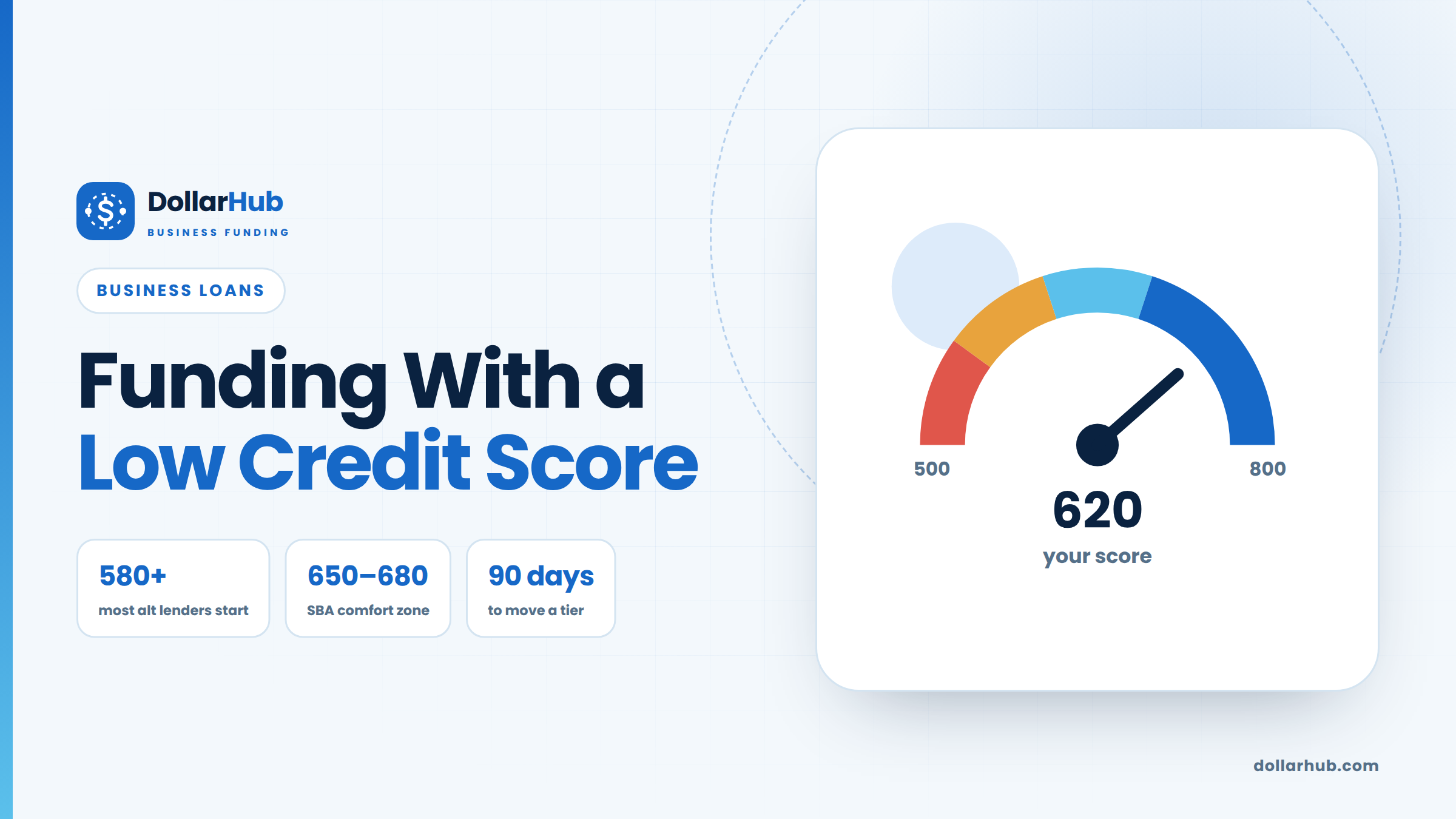
Credit score sets the menu, not the verdict. Here is what each band can realistically get, what it costs, and how to move up one tier in about 90 days.
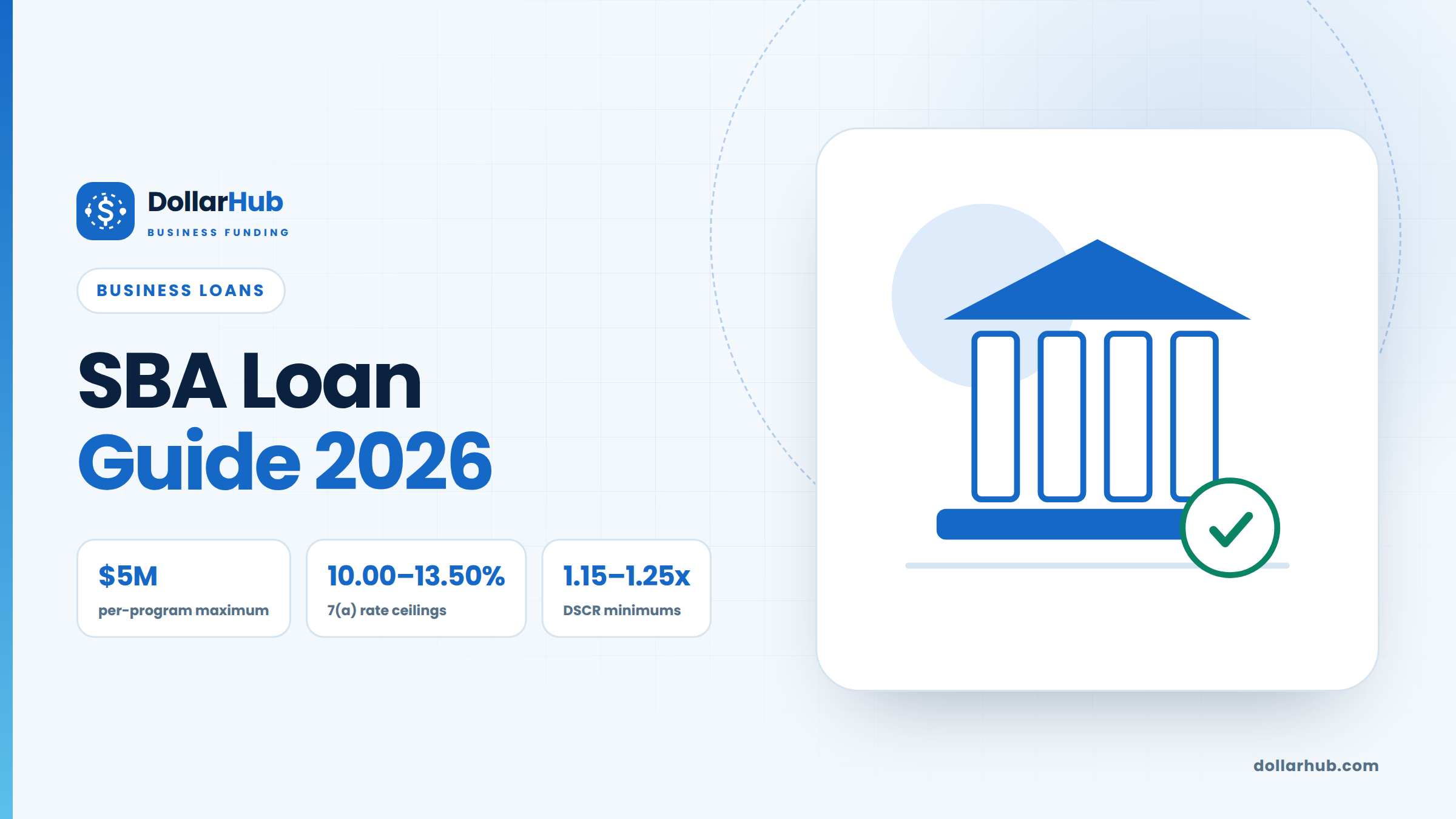
The SBA rulebook changed more in the last year than in the previous five. Current rates, fees, limits and the new acquisition rules, in plain English.
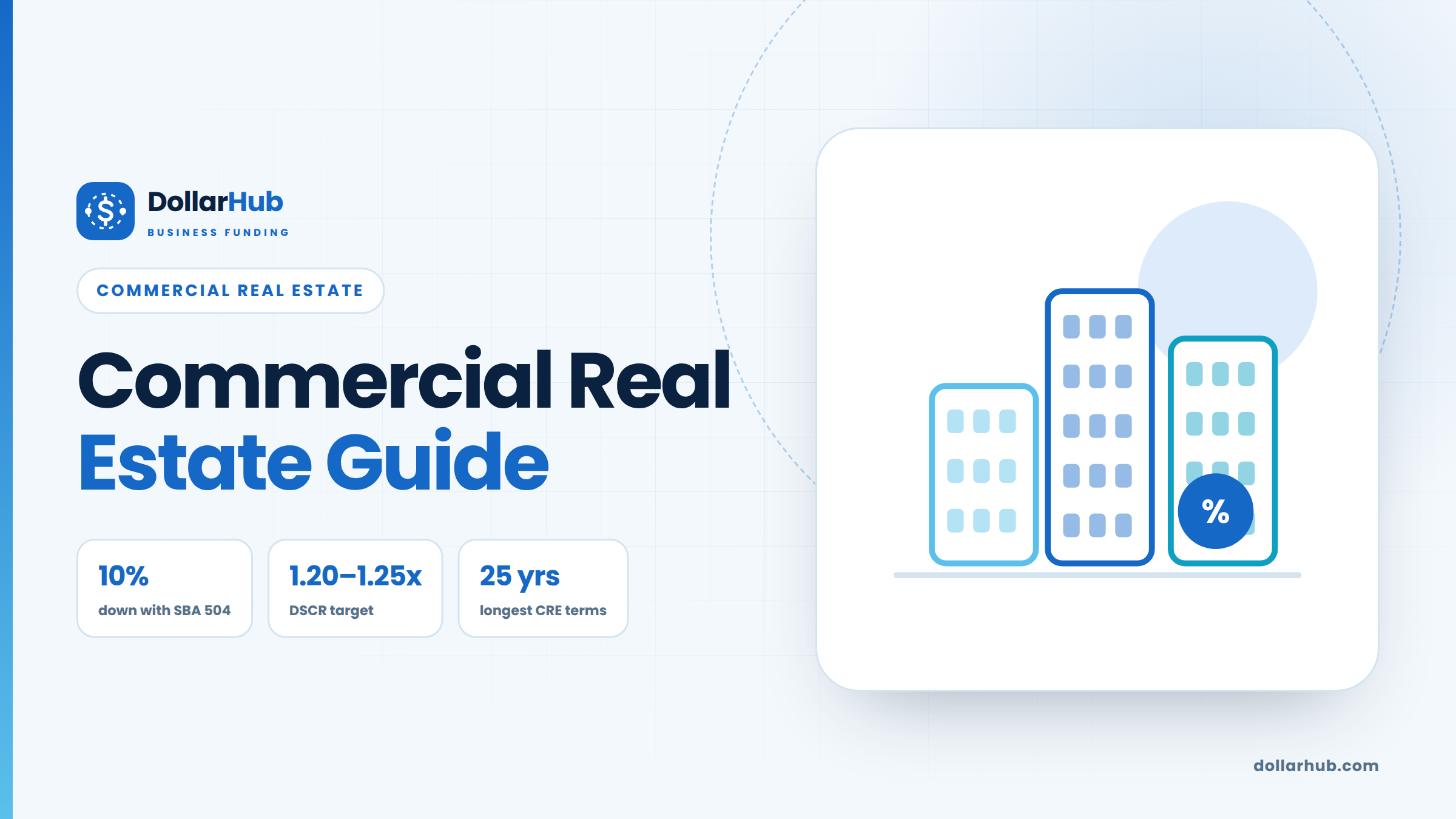
Buying the building you work in is a different deal from buying one you rent out. Here is how each is financed, what the ratios need to be, and what it costs in 2026.