Merchant Cash Advance Guide: How MCAs Really Work
An MCA is not a loan, and a factor rate is not an interest rate. This guide shows the maths, the qualification bar and the clauses that matter before you sign.
Sep 28, 2026Read
Factor rates, holdbacks, approval odds and the disclosure rules now in force — here is what the merchant cash advance market looks like in 2026, and what it means for your next deal.
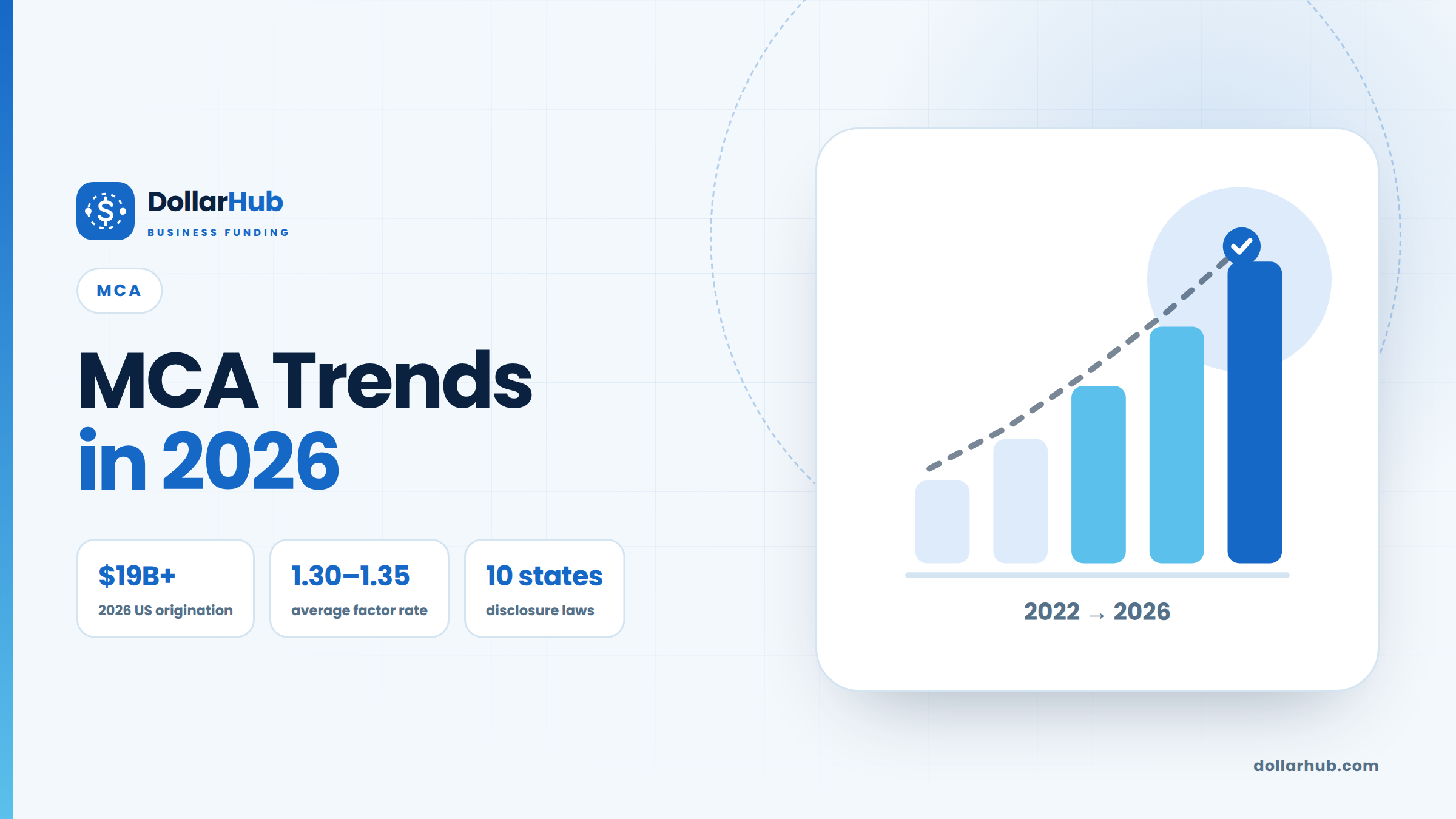
The merchant cash advance market looks very different in 2026 than it did five years ago. Pricing is tighter, underwriting is faster, and ten states now force funders to show you the numbers in a standard format before you sign. If you are considering an advance this year — or already have one — these are the shifts that change what you should ask for and what you should refuse.
Industry estimates put US merchant cash advance origination above $19 billion for 2026, growing at roughly 8–10% a year. Somewhere between 600 and 1,000 funders and ISO programs are competing for those deals.
What that means for you as a business owner is simple: you have leverage. A decent file — consistent deposits, no bounced payments, a year or more in business — will attract several offers. Owners who take the first offer that lands in their inbox usually pay for the privilege.
Bank approval rates for small business loans sit around 25–30%. MCA funders approve roughly 65% of what they see, and online lenders approach 70% for qualified merchants. The gap explains why 12% of small businesses that sought financing in the last cycle applied for an advance or a short-term online loan, up from 9%.
An advance is not cheap money. It is available money, and for a business with uneven sales and a time-sensitive need, availability is sometimes worth the premium. The mistake is using it as a substitute for cheaper capital you could qualify for with a bit of preparation.
Across the market in 2026, factor rates run from about 1.15 for the strongest merchants to 1.50 or higher for riskier files. The average sits around 1.30 to 1.35. Holdbacks — the share of daily sales remitted — typically fall between 10% and 20%, with 12–15% being common, and the higher factor deals pushing toward 20–25%.
Two offers with the same factor rate are not the same deal. A 1.30 factor repaid over six months costs far more in annualized terms than the same factor repaid over twelve. Always convert the offer into three numbers: total payback, estimated days to repay, and the daily or weekly amount leaving your account.
Most major funders now run machine-learning models over your bank statements rather than having a human eyeball them. The models read deposit frequency, balance volatility, NSF events, existing daily debits and the gap between what you claimed on the application and what the statements show.
The practical effect: inflating your monthly revenue on the application no longer gets you a bigger offer — it gets you a faster decline. Accurate numbers, three to six months of clean statements and a clear explanation of any unusual month will do more for your approval than any sales pitch.
Advances are increasingly sold where merchants already do business. Shopify Capital originated $1.4 billion in loans and advances in a single quarter of 2026, up around 70% year on year. eBay's seller capital programme has passed $1 billion in total originations.
Platform offers are convenient and often competitively priced for small amounts, but they are tied to one sales channel. If most of your revenue runs through a platform, compare their offer with an independent one — and check whether the platform's remittance stacks on top of other obligations.
Ten states now require commercial financing disclosures, including California, New York, Utah, Virginia, Florida, Georgia, Kansas, Missouri, Connecticut and Texas. Thresholds and formats differ, but the direction is the same: before you sign, you should receive a standardized sheet showing total funds provided, total repayment, payment amount and frequency, and an estimated APR.
California's updated rules went further in January 2026, requiring APR to be re-disclosed under the state's own methodology. Texas requires providers to register with the state regulator by the end of 2026.
What to do with this: if you are in a covered state and a funder cannot produce a disclosure sheet, treat that as a serious warning sign. If you are not in a covered state, ask for the same numbers anyway. Any legitimate funder can produce them in minutes.
The easiest way to turn a workable advance into a crisis is to take a second and third one on top of it. Each remittance is taken daily, so three advances can quietly consume a quarter of every day's sales before you pay rent or payroll.
If you already have more than one advance running, the move is consolidation or refinancing, not another advance. We cover the options in I want to refinance my MCAs — what are my options?
No. It is the purchase of a portion of your future receivables at a discount, which is why it is priced with a factor rate rather than an interest rate and why most state lending laws treat it differently.
For a strong file — a year or more in business, consistent deposits, few or no NSFs — 1.15 to 1.25 is achievable. Around 1.30 to 1.35 is the market average. Above 1.45, you should be asking whether a different product fits better.
Competition and better data are pushing pricing down slowly at the top of the credit box, while the high-risk end of the market has stayed expensive. Falling benchmark rates help term lenders more than they help advances, because advance pricing is driven mostly by expected losses.
Usually not on your personal consumer report, though many funders file a UCC lien that other lenders will see, and some report to commercial bureaus. A UCC filing can affect your ability to get other financing until it is released.
Figures in this article reflect market data published through October 2026. Pricing varies by industry, state and lender — confirm current terms before you sign anything.
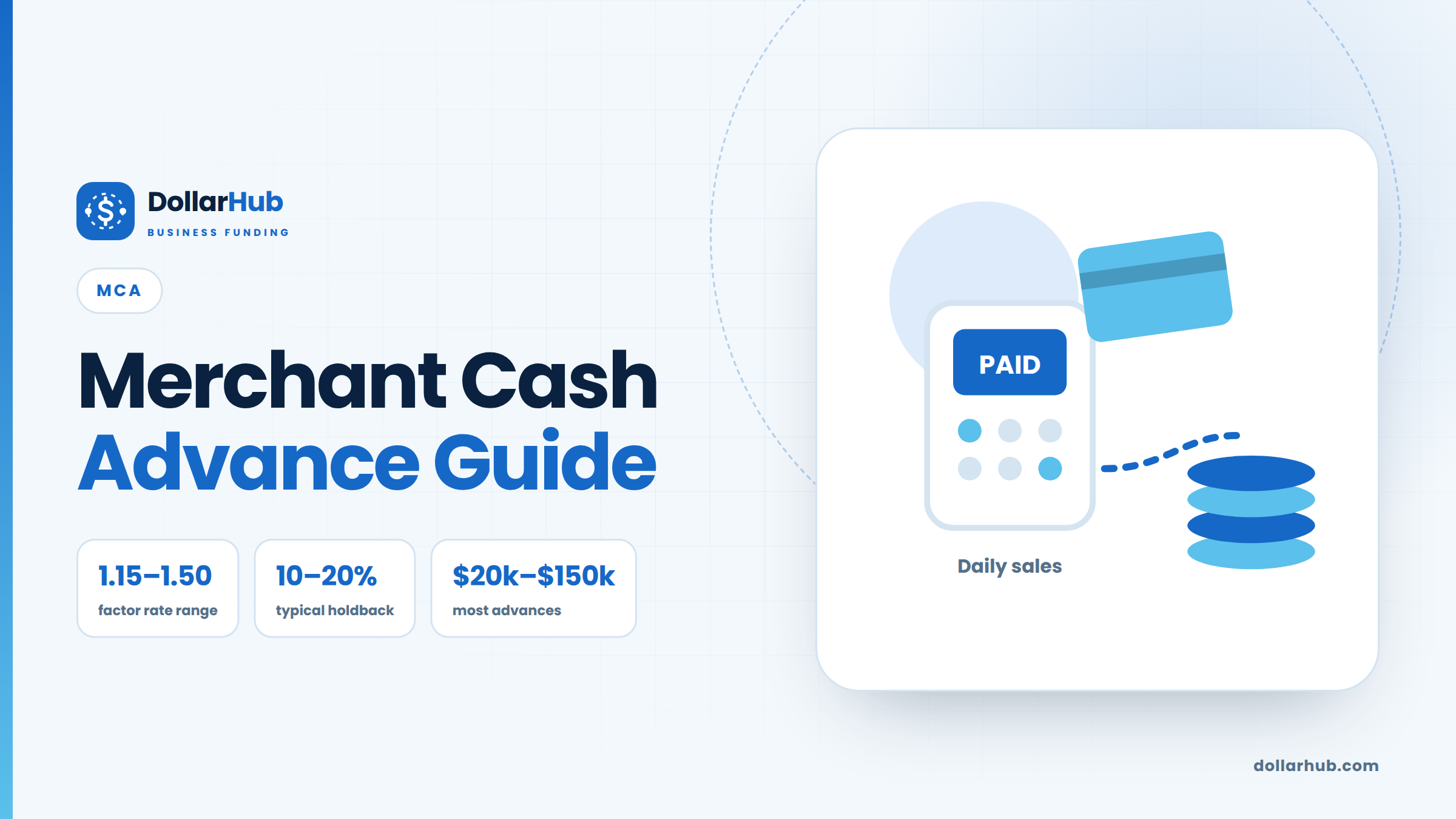
An MCA is not a loan, and a factor rate is not an interest rate. This guide shows the maths, the qualification bar and the clauses that matter before you sign.
A factor rate is not an interest rate. Here is how to turn it into a number you can actually compare.
Taking several advances at once can squeeze daily cash flow. Consider these alternatives first.